
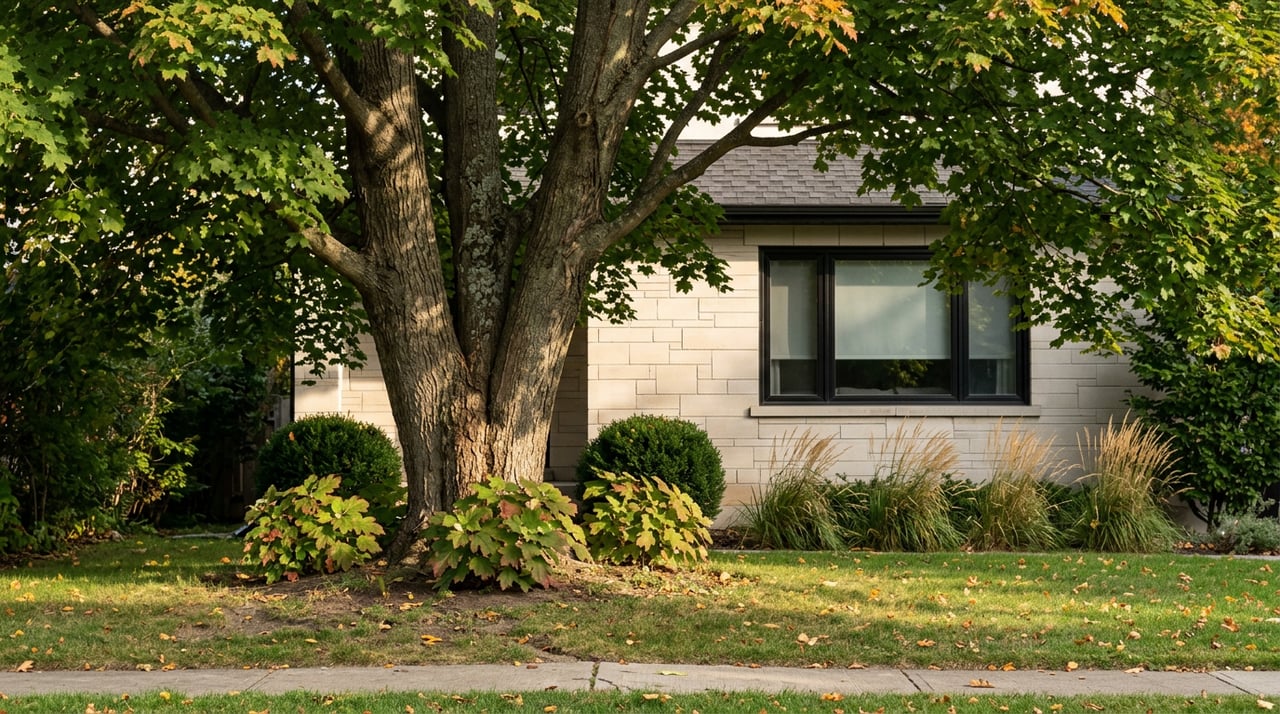
Every September, the Long Branch Neighbourhood Association turns Marie Curtis Park into a one-day festival ground. There's face painting for the kids, a plant exchange for the gardeners, and a certified arborist walking small groups past specific trees to explain what they are and why they're still standing. Most people who show up for Tree Fest come for the free stuff and the music. Almost none of them are thinking about the fact that they're standing on land that used to hold houses.
In October 1954, Hurricane Hazel dropped 28 centimetres of rain on the Toronto region in 24 hours. At the mouth of Etobicoke Creek, where the park now sits, the flooding killed seven area residents and destroyed at least 56 homes and cottages. Across the wider GTA the storm's toll was far worse: roughly 81 dead and close to 1,868 people left homeless. Long Branch, then still its own village, took a direct hit at exactly the spot where families now spread picnic blankets every summer.
What happened next is the part most residents skip over. The government didn't rebuild those homes. It expropriated 164 properties near the creek mouth for about $800,000, a sum worth roughly $9.3 million in 2025 dollars, and removed what was left of the cottages on the flats. The western channel of the creek was filled in. Structures on the old sandbar, Island Road, and 43rd Street came down. Sections of 43rd Street south of Lake Shore Boulevard and the Lakeshore Promenade west of 42nd Street were closed to traffic entirely and turned into parkland. By 1959, a stretch of shoreline that had held dozens of homes held a park instead.
The park is named for the woman who pushed the trade
Marie Curtis was the reeve, essentially the mayor, of the Village of Long Branch when that decision got made. She's one of a small number of people, and a smaller number of women, to have a Toronto park named after them, and the honor wasn't sentimental. According to Waterfront Toronto, she also helped build the wider system of regional parkland that eventually connected into what residents now use as the Waterfront Trail. The park that bears her name isn't just a memorial. It's the first link in a chain that now runs west into Mississauga and east toward the rest of the city's shoreline, part of a longer pattern of turning flood-prone waterfront into public trail rather than private lots.
That history is exactly what Tree Fest's historical walk covers. Past festivals have included a stop at a British 32-pound naval cannon sitting inside the park, alongside stops tied to Hurricane Hazel and to Marie Curtis herself. The Long Branch Neighbourhood Association didn't invent this route for novelty. The LBNA describes its own mandate as protecting, celebrating, and enhancing the neighbourhood, and walking people past a cannon and a flood marker is a fairly literal version of that job description. The festival is the association's way of making sure the story of why this park exists doesn't quietly disappear as the people who remember the flood age out of the neighbourhood.
What actually fills the afternoon
Strip away the history and Tree Fest is still a solid way to spend a September Sunday. Recent years have drawn more than 50 exhibitors and vendors into the park, running from noon to 4pm at no charge. The program typically includes:
- Guided 30-minute tree identification walks with a certified arborist
- The historical walk past the cannon and flood-era landmarks
- Live local music, with an open mic slot for younger performers in some years
- A plant exchange and shrub giveaway for anyone who wants to take a piece of the day home
- Storytelling and face painting for kids
Getting there doesn't require a car. The 501 or 507 streetcar runs to the Long Branch Loop, from which it's a short walk down 42nd Street into the park. TTC buses 123 and 40 also terminate at the loop, connecting back to Kipling Station. The Long Branch GO Station on the Lakeshore West line is a five-minute walk from the festival site, and Mississauga Transit connects at the same loop. Cyclists coming from the Mississauga side can ride the Waterfront Trail straight into the park and cross the footbridge over Etobicoke Creek to reach the festival grounds without touching a road.
Tree Fest is one weekend of a year-round habit
The festival is the visible part of something the LBNA does constantly. The association runs a standing Tree Canopy Preservation and Enhancement Committee, which is the reason Long Branch's older streets still read as leafier than a lot of comparable South Etobicoke blocks. In June, the LBNA also organizes the West Lakeshore Garden Tour, a free, self-guided day that opens with festivities at the Gatehouse Healing Garden and lets residents walk through private gardens across Long Branch, New Toronto, Mimico, and Alderwood. The group has also run a Tree for Free giveaway at nearby Colonel Samuel Smith Park, the same park that hosts Toronto's first outdoor figure-eight skating trail once winter sets in.
None of this is really about any single Sunday. It's a resident association treating the neighbourhood's tree cover and public shoreline as something that has to be actively maintained, not just enjoyed. Tree Fest is the one day a year that work becomes a public event instead of a committee meeting.
Where the afternoon usually ends up
Once the festival wraps, a fair number of people end up a few blocks over at Long Branch Social House, which has built its own weekly rhythm around the neighbourhood's calendar. Thursdays run a feature pizza and oyster special from May through September alongside acoustic music, Fridays bring live music into the late evening, and Sunday nights come with a running deal of free mussels with any bottle of wine. It's a fitting way to close a day built on the same idea Tree Fest runs on: that a neighbourhood keeps its character by actually using it.
If you've walked past the cannon in Marie Curtis Park without knowing why it's there, or wondered why this particular stretch of shoreline is parkland instead of another row of lakefront homes, this is where those answers live. The Long Branch Neighbourhood Association keeps the calendar. The park keeps the evidence.
If you're curious how any of this history shapes what a home near the park is actually worth, or you're weighing a move within South Etobicoke's lakefront communities, Team Armstrong knows this stretch of shoreline block by block. Request a Free Market Evaluation and get a read on the market that's as specific as the neighbourhood itself.